Wildfire preparation is not one clearing project or one ring of bare ground. The Colorado State Forest Service (CSFS) describes a home ignition zone that combines two priorities: reducing the chance that the structure itself ignites and managing the fuels around it. That work starts at the building and moves outward.
Colorado Fire Mitigation: Start Here
- Address the structure first. Clear roofs, gutters, decks, vents, and the base of exterior walls where embers can collect.
- Keep 0 to 5 feet noncombustible. Remove woody mulch, leaves, needles, stored items, and vegetation next to the building.
- Reduce fuels from 5 to 30 feet. Separate shrubs, remove ladder fuels, prune branches, and keep grasses short.
- Manage vegetation from 30 to at least 100 feet. Thin dense stands, remove heavy dead material, and account for slope, wind exposure, and neighboring fuels.
These distances are a planning baseline, not a one-size-fits-all prescription. Buildings, steep slopes, grass-dominated sites, outbuildings, and adjacent open space can change the treatment area. Review the current CSFS home ignition zone guidance before you begin.
Why Colorado Properties Need a Site-Specific Plan
Colorado wildfire exposure is not limited to homes deep in the forest. Grass, shrubs, ornamental plantings, fences, decks, stored materials, and wind-carried embers can connect open land to a structure. In Douglas County communities such as Sedalia and Larkspur, a plan may need to account for ponderosa pine, Gambel oak, native grass, outbuildings, long driveways, and sloped terrain. Suburban sites can have a different problem: narrow side yards and close neighboring structures leave less room to separate fuels.
The practical goal is risk reduction, not a promise that a building will survive. CSFS advises property owners to begin at the structure, work outward, and maintain the home ignition zone over time. Local fire restrictions, disposal rules, utility clearances, HOA requirements, and site access should be checked before cutting, chipping, hauling, or burning material.
Colorado's Three Defensible-Space Zones
Measure each zone from the outer edge of the structure, including attached decks. Detached garages, barns, sheds, and other buildings need their own treatment areas. The current CSFS framework uses the following distances.
Zone 1: 0 to 5 Feet From the Structure
This is the highest-priority area because small embers can lodge against siding, beneath decks, in corners, or in dry debris. The aim is to remove combustible material immediately next to the building.
- Remove leaves, pine needles, twigs, and other debris from roofs, gutters, decks, and the ground at the foundation.
- Use noncombustible surfaces such as rock, gravel, concrete, or pavers instead of wood mulch within 5 feet.
- Remove vegetation, firewood, stored lumber, and other combustible items from this zone.
- Keep branches from overhanging the roof or touching the structure.
- Evaluate vents, fencing, decks, and other building features as part of home hardening; vegetation work alone does not address every ignition path.
Zone 2: 5 to 30 Feet From the Structure
Zone 2 reduces the amount and continuity of fuel near the building. Exact spacing depends on vegetation type and terrain rather than one universal number.
- Remove dead plants, downed branches, and accumulations of needles or leaves.
- Separate shrubs and tree crowns so flames have fewer continuous paths toward the structure.
- Remove ladder fuels: low branches, small trees, and shrubs that can carry fire into taller tree canopies.
- Mow grasses and weeds to 4 inches or less, then maintain them as they regrow.
- Move firewood and slash away from the home; CSFS recommends locating firewood at least 30 feet away.
Zone 3: 30 to 100 Feet or More
The outer zone reduces fuel density and breaks up continuous vegetation. On relatively flat ground it extends to at least 100 feet. A steeper slope, high-wind exposure, dense woody fuels, or a grass-dominated interface may call for treatment beyond 100 feet.
- Thin overcrowded trees and shrubs with attention to species, condition, crown spacing, and slope.
- Remove heavy concentrations of dead and down material.
- Keep access routes visible and passable, and manage ladder fuels along driveways.
- Coordinate where treatment areas overlap neighboring parcels, common areas, or open space.
Vegetation Work That Supports Defensible Space
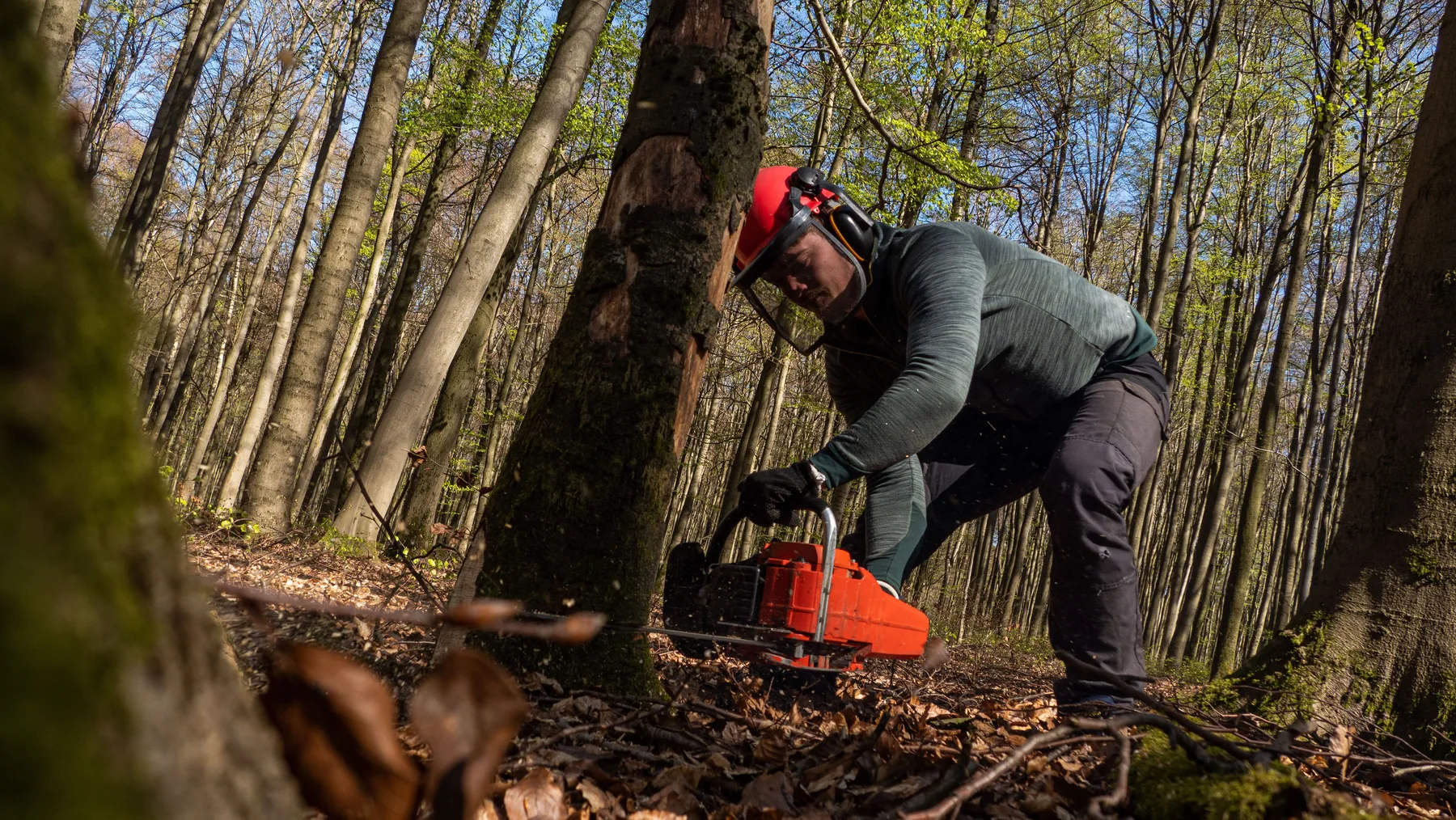
Professional fire mitigation may combine selective thinning, pruning, brush reduction, mowing, chipping, hauling, and ongoing maintenance. The right combination depends on the plants present, the structure, terrain, access, and the intended condition after the work.
Selective Thinning and Ladder-Fuel Removal
Selective thinning reduces crowding while keeping appropriate healthy vegetation. Removing low branches, small conifers, and dense shrubs can interrupt the vertical path that lets a surface fire climb into tree crowns. The work should be planned around tree health and site conditions, not performed as uniform clearing.
Gambel Oak, Shrubs, and Grass
Gambel oak and other resprouting shrubs need follow-up after the initial cut. CSFS notes that aggressively resprouting shrubs may need treatment every three to five years or more often depending on growth. Grasses and weeds can need attention more than once a year. This is why a defensible-space plan should include maintenance, not stop at the first cleanup.
Slash and Material Disposal
Cut branches and woody debris become fuel if they are left in piles. Slash may be chipped, hauled, lopped and scattered where appropriate, or burned only when local rules and conditions allow. Before work begins, confirm where material will go, whether equipment can reach the site, and whether the property is under fire or burn restrictions. Never assume a seasonal drop-off or cost-share program is open without checking the current local guidance.
Cost, Tax Credits, Grants, and Insurance Documentation
There is no dependable flat price for Colorado fire mitigation. Acreage, number of structures, slope, access, vegetation density, tree size, equipment needs, and slash disposal all affect the scope. A walk-through also helps separate priority work near buildings from longer-term vegetation management farther out.
Colorado provides a wildfire mitigation income tax credit for qualifying taxpayers for tax years 2023 through 2027. Eligibility and qualifying expenses are defined by the state, so review the Colorado Department of Revenue guidance or speak with a tax professional rather than treating an estimate as tax advice.
Grant and cost-share programs change by location and funding cycle. CSFS publishes grant and funding information, but many statewide programs are awarded through public agencies or community organizations rather than directly to individual homeowners. Check with your county, local fire protection district, HOA, or community wildfire program before assuming a project qualifies.
Insurance carriers set their own underwriting and documentation requirements. Ask your carrier what it wants to see before work begins. Keep dated photos, the written scope, invoices, and notes about completed maintenance, but do not assume that mitigation guarantees coverage or a premium reduction.
When to Schedule and How to Maintain the Work
Tree and brush work is often easier during the dormant season, while mowing, debris removal, and roof-and-gutter cleanup continue through the growing and fire seasons. Schedule around site access, soil conditions, local restrictions, nesting or habitat considerations where applicable, and disposal availability.
- Before work: identify every structure, confirm property boundaries and access, check restrictions, and decide how slash will be handled.
- Start close to buildings: address roofs, gutters, decks, foundations, and the first 5 feet before lower-priority outer-zone work.
- Work outward: reduce fuel continuity from 5 to 30 feet, then thin and maintain the outer zone based on terrain and vegetation.
- Revisit the site: remove new debris, mow regrowth, inspect after wind or snow damage, and re-treat resprouting vegetation.
Colorado Fire Mitigation FAQ
There is no reliable flat rate. Cost depends on acreage, number of structures, slope, access, vegetation density, tree work, and how slash will be processed or hauled. A site assessment is the appropriate way to define scope and pricing. JLS can assess the vegetation and access needs for properties within its service area.
The 30-30-30 rule is fire-weather shorthand for relative humidity below 30%, temperature above 30°C (about 86°F), and wind above 30 km/h (about 19 mph). It is not a Colorado defensible-space layout rule. For decisions at your property, follow current weather alerts and fire restrictions, and use the CSFS home ignition zone guidance.
Programs and eligibility change. CSFS lists statewide funding opportunities, while counties, fire protection districts, HOAs, and community programs may offer local cost sharing. Colorado also allows a wildfire mitigation income tax credit for qualifying taxpayers in tax years 2023 through 2027. Confirm eligibility with the program or a tax professional before starting work.
Start with the structure and work outward. Reduce ignition hazards on the building, keep the first 5 feet free of combustible material, reduce fuels from 5 to 30 feet, and manage vegetation from 30 to at least 100 feet. Slope, vegetation, and neighboring fuels can require greater distances, and every zone needs ongoing maintenance.
Request Fire Mitigation Help in Douglas County
JLS Landscape & Sprinkler provides fire mitigation and vegetation management services for residential and commercial properties, HOAs, and metro districts across Douglas County and the Denver Metro area. A property visit can clarify which areas are highest priority, what equipment and access the work requires, and how cut material will be managed.
For recurring needs, landscape maintenance can coordinate mowing, debris removal, and vegetation upkeep as regrowth and seasonal conditions change.