
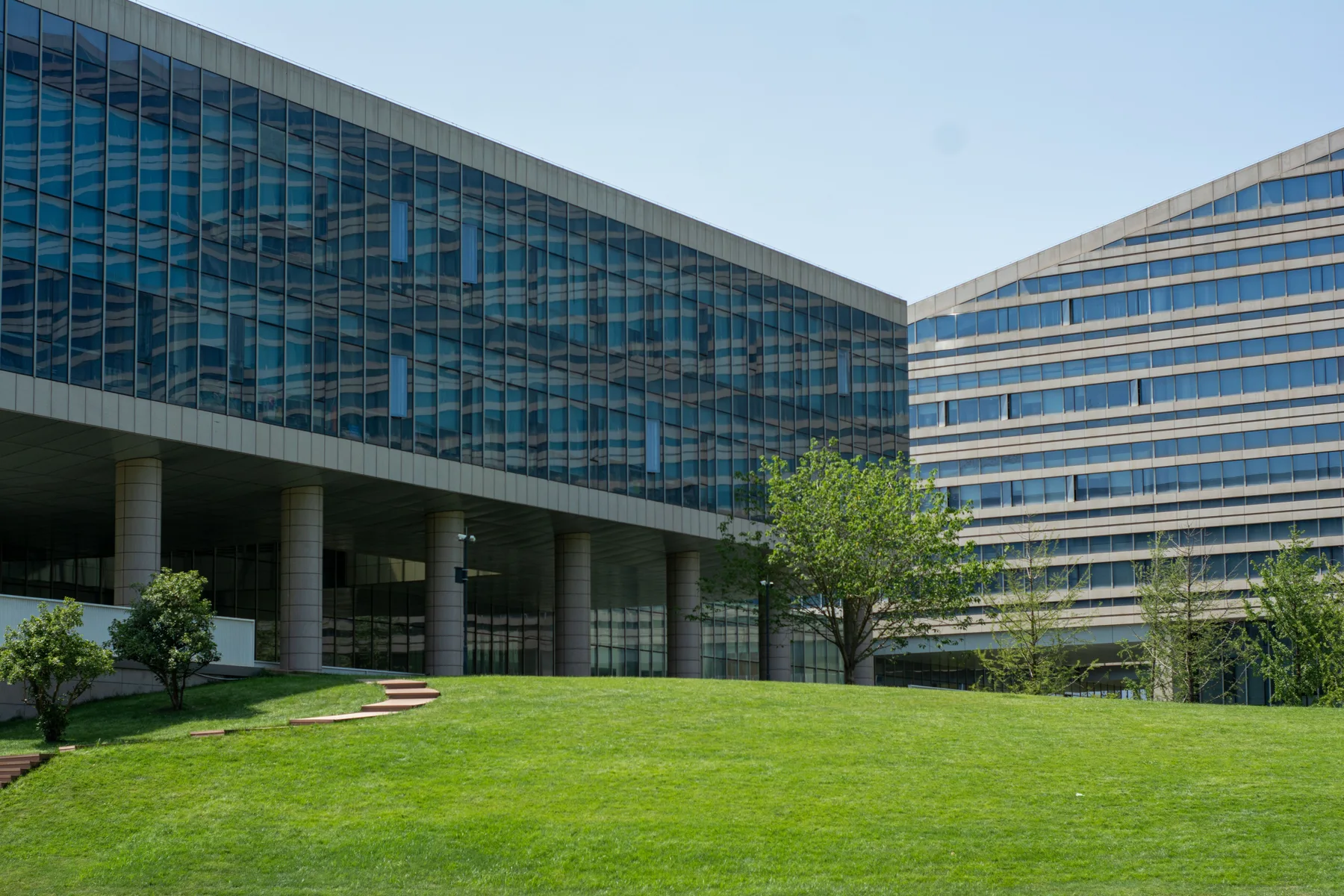
Commercial Landscape Maintenance Routes
Recurring commercial landscape maintenance for HOA communities, office parks, retail centers, and metro districts across Douglas County and the Denver Metro area. Reliable route crews, consistent edges, healthier turf, and clear communication for managers.
Recurring Turf Care for High-Use Properties
Commercial landscape maintenance is not residential mowing at a larger scale. It requires route planning, water district awareness, HOA compliance standards, commercial timing requirements, and the agronomic realities of keeping turf healthy at 5,500 to 6,500 feet elevation in a semi-arid climate.
JLS Landscape & Sprinkler maintains commercial turf across the Denver Metro and Douglas County for HOA common areas, corporate office parks, retail shopping centers, metro district land, church campuses, medical offices, and multi-family residential complexes. Our recurring care programs cover mowing, edging, trimming, fertilization, aeration, weed control, and seasonal adjustments - all scheduled around Colorado's actual growing season rather than a generic national calendar.
For HOA boards and property managers, JLS provides the documentation and communication that commercial accounts require. Monthly reports detail work completed, upcoming services, irrigation system status, and any issues identified. Our crews know the difference between a Tuesday mowing schedule for a senior community and a pre-dawn schedule for a retail center that needs lots clean before stores open.
Colorado's growing season at Douglas County elevations typically runs from mid-April through mid-October, with roughly 26 weeks of active turf care. The work continues outside that window through fall cleanup, leaf removal, winterizer applications, and snow management transitions that keep commercial properties presentable and safer through winter.
Tasks That Keep Commercial Turf Presentable
Weekly Mowing & Edging
Professional mowing on a reliable weekly schedule during growing season. Hard edges along walks, curbs, and beds. String trimming around obstacles. Clippings mulched or collected per property requirements.
Fertilization & Weed Control
Four to six application fertilization program designed for Colorado's alkaline soils. Pre-emergent and post-emergent weed control. Iron supplements for chlorosis management at elevation.
Aeration & Overseeding
Annual core aeration in late summer to relieve Douglas County's heavy clay compaction. Overseeding with appropriate cool-season grass varieties for your property's sun/shade exposure.
Route-Level Irrigation Checks
Weekly irrigation checks during growing season. Head adjustments, zone timing updates, rain sensor verification, and coordination with water district restrictions.
Seasonal Transitions
Spring cleanup and fall cleanup included. Irrigation activation and winterization. Seasonal color rotations and annual flower installation available.
Documentation & Reporting
Monthly service reports, before/after photography, irrigation system status, and issue identification. HOA boards and property managers receive the documentation they need for compliance and budgeting.
Commercial Landscape Maintenance FAQ
During Colorado's growing season (mid-April through mid-October), commercial properties are mowed weekly. Some high-visibility properties like corporate headquarters and retail centers receive twice-weekly mowing during peak growth periods in May and June. Mowing frequency adjusts naturally as growth slows during hot, dry midsummer and again in fall.
Yes. We provide detailed annual maintenance proposals that break down costs by service category, making it easy for HOA boards to budget accurately. We also attend board meetings when requested to present maintenance plans, address resident concerns, and provide professional recommendations on landscape improvements or cost optimization.
JLS crew members hold relevant industry certifications including CSP (Certified Snow Professional), LEED AP, LICT (Landscape Industry Certified Technician), and Pesticide QS qualification through the Colorado Department of Agriculture. All team members are background-verified through TheSeal.com. These credentials matter to commercial property managers and HOA boards who need documented professional qualifications.











Service Calendars Built Around Property Operations
Commercial landscape maintenance works best when the route plan is tied to how the property actually functions. JLS reviews access patterns, tenant schedules, irrigation windows, snow-season transition, and the standards property managers need to enforce consistently before the first full-season proposal is finalized.
Our crews look at mowing frequency, bed edging, pruning cycles, weed pressure, turf health, parking lot traffic, loading zones, and seasonal color expectations before recommending a service cadence. The plan stays predictable for boards and managers while still leaving room for weather-driven adjustments after hail, heavy rain, drought stress, or early freezes.
JLS builds commercial care calendars around Colorado's actual seasons. Spring work often starts with cleanup, irrigation activation, bed edging, pre-emergent weed control, and the first turf applications. Late spring shifts into weekly mowing, trimming, shrub care, and irrigation adjustments as temperatures rise. Summer service focuses on consistent presentation, dry spot response, water-use compliance, and fast correction when a controller, valve, or head creates visible stress.
Late summer and fall bring core aeration, overseeding where appropriate, winterizer fertilizer, leaf removal, and transition planning for snow operations. Pairing routine maintenance with proactive irrigation checks and repair recommendations gives managers a clearer budget path and reduces emergency calls.
What Managers See on the Route Plan
- Priority entrances, high-visibility beds, and turf areas identified before peak season.
- Reporting for broken heads, safety concerns, plant decline, storm debris, and repair needs.
- Scheduling that respects medical offices, retail centers, HOA common areas, and corporate campuses.
- Seasonal notes for properties in Highlands Ranch, Lone Tree, Castle Rock, and the Denver Metro.