
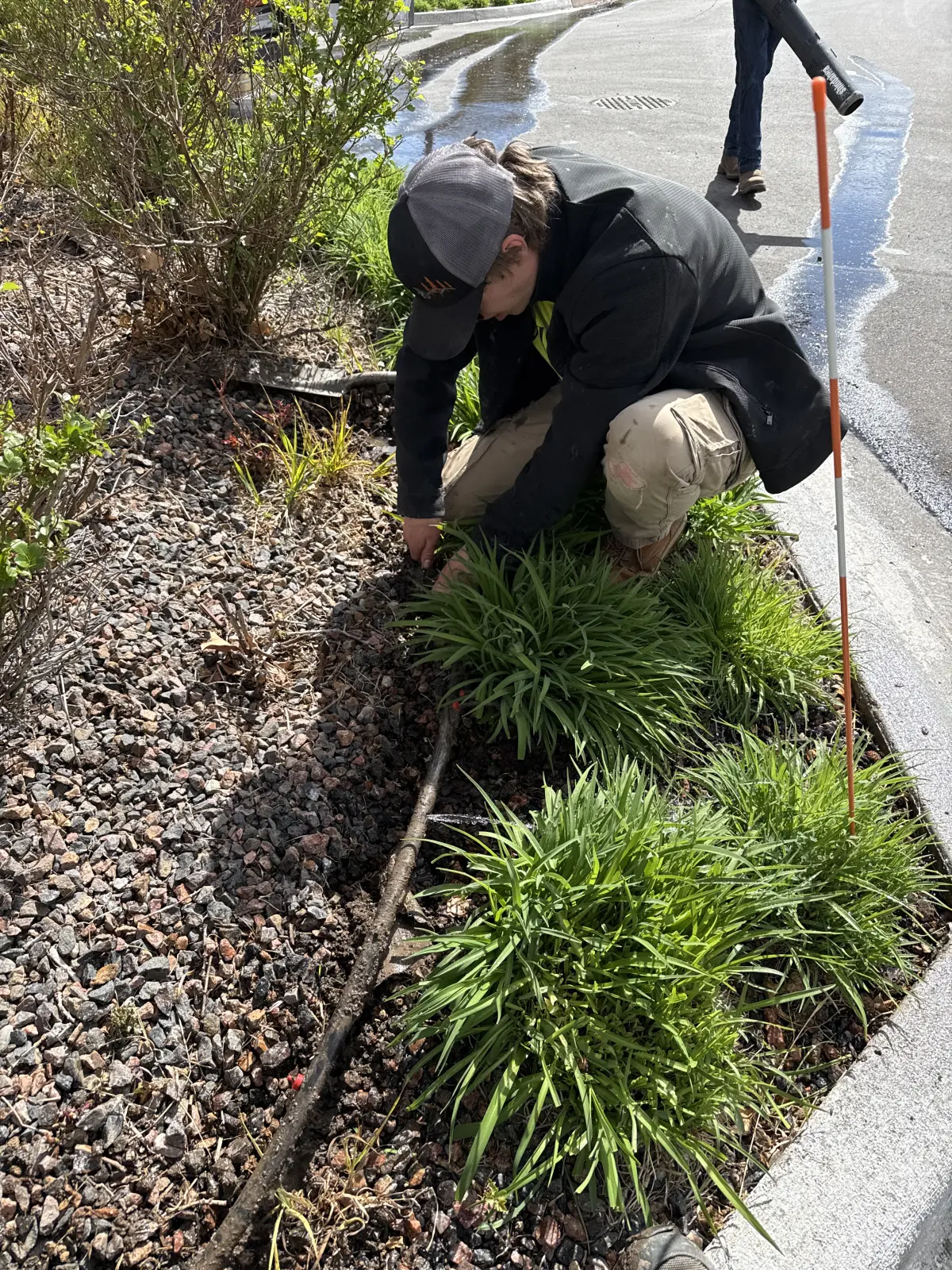
Colorado summers are hot, dry, and subject to water restrictions that change by municipality. Getting your irrigation system dialed in for summer is the difference between a healthy landscape and a stressed, browning one that costs more to recover in fall.
Here is what 50 years of irrigating properties across the Front Range has taught us about summer watering in Denver Metro and Douglas County.
Set the Right Watering Schedule
Most cool-season grasses along the Front Range (Kentucky bluegrass, fescue blends) need about 1 to 1.5 inches of water per week during peak summer. Here is how to deliver that efficiently:
- Frequency: 3 days per week for established lawns. New sod or seed may need daily watering until established.
- Run times: 20 to 30 minutes per zone for spray heads. 45 to 60 minutes for rotary nozzles or rotor heads.
- Start time: Begin watering between 4:00 AM and 6:00 AM. Finish before 10:00 AM to minimize evaporation.
- Cycle and soak: On slopes or clay soils, split each zone into two shorter cycles with 30 to 60 minutes between them. This prevents runoff.
Always check your local water provider's designated watering days. Castle Rock, Denver Water, and each Douglas County water district have different schedules.
Adjust Your Controller Monthly
The biggest mistake we see on both residential and commercial properties is setting the controller in May and never touching it again until October. Colorado's water demand changes significantly month to month:
- May: 60-70% of peak. Cooler nights and spring rain reduce demand.
- June: 80-90% of peak. Temperatures climb, rainfall drops.
- July: 100% peak demand. Hottest month with the longest days.
- August: 90-100% of peak. Monsoon moisture may allow slight reduction.
- September: 60-70% of peak. Shorter days and cooler temps reduce ET.
If your controller has a seasonal adjustment feature, use it. Set July at 100% and reduce other months proportionally. Smart controllers with weather-based ET adjustment handle this automatically.
Water Restrictions and Compliance
Colorado water restrictions are not optional suggestions -- they carry real fines. Most Front Range providers enforce a 3-day-per-week maximum during summer, with designated days based on your address (odd/even). Some districts, like Castle Rock Water, go to a 2-day schedule during drought stages.
Key rules that apply across most Denver Metro providers:
- No watering between 10:00 AM and 6:00 PM
- No watering on Sundays (many districts)
- No runoff onto streets, sidewalks, or adjacent properties
- Broken sprinkler heads must be repaired within 10 days of notification
We monitor water restriction updates across our service area -- Castle Rock, Highlands Ranch, Parker, Lone Tree, and throughout Douglas County -- and adjust client systems proactively when restriction levels change.
Common Summer Irrigation Problems
Brown Spots Despite Watering
If parts of your lawn are browning while other areas look fine, the issue is almost always coverage, not water volume. Heads may be tilted, clogged, or not rotating fully. A sprinkler system inspection identifies gaps in coverage that waste water on already-wet areas while missing dry spots.
Runoff and Puddling
Colorado's clay soils absorb water slowly. If water runs off your lawn within the first 10 minutes of watering, your run times are too long. Switch to cycle-and-soak programming: water each zone for 10 minutes, let it rest for 30 to 60 minutes, then run the same zone again.
High Water Bills
A sudden spike in your water bill usually means a leak in the system. Underground line breaks, cracked valve diaphragms, and stuck-open valves can waste thousands of gallons per day. If your bill jumps by more than 20% without a schedule change, have the system checked immediately.
Trees and Shrubs Need Different Watering
Trees and shrubs on your property need water too, but their needs differ from turf. Deep-root watering trees once every two to three weeks during summer is more effective than relying on lawn sprinklers to provide enough moisture. Sprinkler coverage reaches the top 4 to 6 inches of soil. Tree roots extend 12 to 24 inches deep.
Our landscape maintenance program includes deep-root watering for trees as part of the summer care package. This is especially important during drought conditions when water restrictions limit sprinkler use.
Prepare Now for Peak Summer
Mid-May is the ideal time to have your irrigation system inspected and adjusted for summer. By June, schedules are booked and you are already losing ground to heat stress if the system is not optimized.
A pre-summer irrigation check from JLS includes:
- Run each zone and check for broken, tilted, or clogged heads
- Verify coverage uniformity with catch cup testing
- Program the controller for your specific water provider's schedule
- Set cycle-and-soak for slopes and clay-heavy zones
- Check backflow preventer for compliance
Frequently Asked Questions
How often should I water my lawn in summer in Colorado?
Most Front Range lawns need 3 watering days per week during peak summer (June through August). Water deeply -- 20 to 30 minutes per zone for spray heads, 45 to 60 minutes for rotary heads. Always check your local water provider's restrictions for allowed watering days.
What time should I run sprinklers in Colorado summer?
Water between 4:00 AM and 10:00 AM. This is when wind speeds are lowest, temperatures are coolest, and evaporation is minimal. Many Colorado water providers require watering before 10:00 AM or after 6:00 PM. Early morning is always the better option because overnight watering promotes fungal growth.
How do I know if my lawn is getting enough water?
Do the screwdriver test: push a 6-inch screwdriver into the soil after watering. If it slides in easily to full depth, your lawn is getting adequate moisture. If it stops at 2 to 3 inches, you need to water longer. Also watch for footprinting -- if grass stays flat when you walk across it instead of springing back, it needs water.